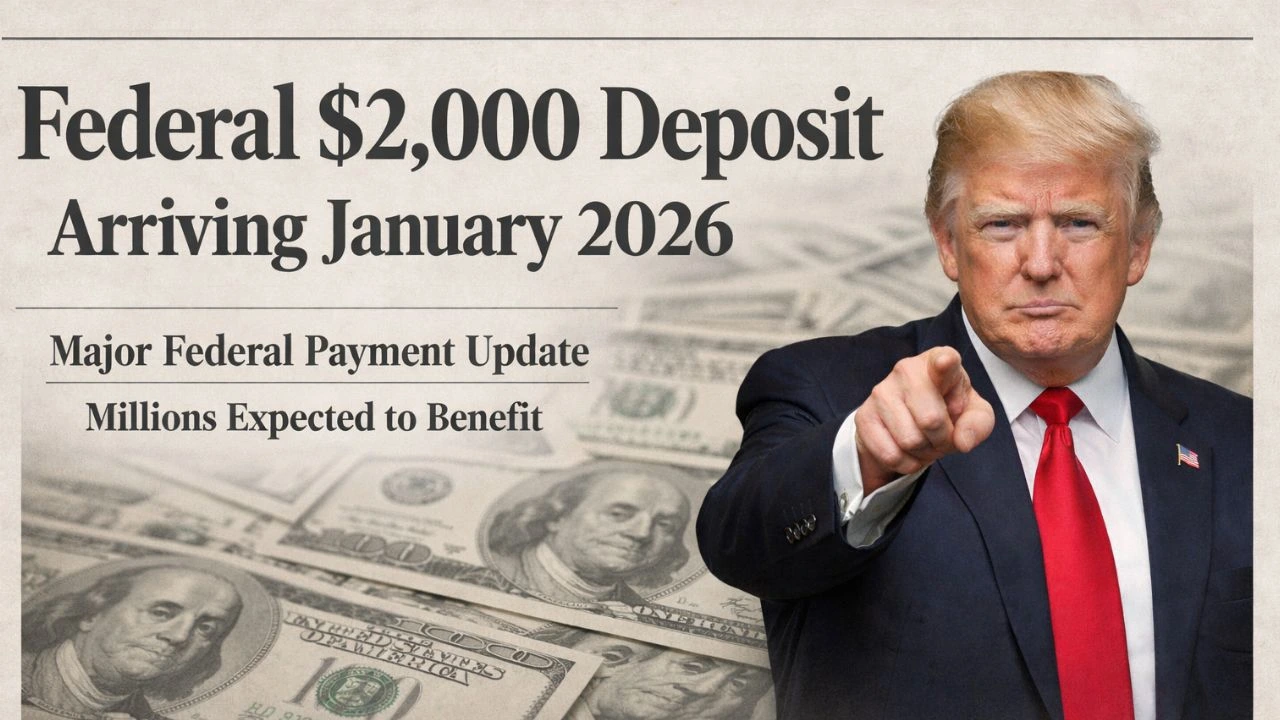
In recent weeks, many Americans have been searching online about a $2000 federal deposit expected in January 2026. While the government has not officially confirmed a single universal payment for everyone, discussions around stimulus support, benefit increases, and relief deposits have brought this topic into the spotlight.
This article explains what the $2000 deposit means, who may qualify, expected timelines, and how to prepare, using verified patterns from past federal payments.
What Is the $2000 Federal Deposit?
The $2000 federal deposit being discussed is not a new confirmed stimulus check for all citizens. Instead, it may relate to:
- Cost-of-Living Adjustments (COLA)
- Social Security or SSI payment increases
- Veteran benefits revisions
- Federal relief or tax credit adjustments
- Special one-time support programs (if approved)
Many past deposits created confusion because they were rolled out in phases and targeted specific income groups.

Who May Be Eligible?
Eligibility depends on the type of federal program under which the payment is issued. Based on previous federal payment structures, the likely eligible groups include:
- Social Security beneficiaries
- SSI or SSDI recipients
- Low-income households
- Veterans receiving VA benefits
- Seniors above a certain age threshold
- Taxpayers meeting income criteria
Final eligibility will depend on income limits, filing status, and benefit enrollment.
Expected Payment Timeline
If a $2000 federal deposit is approved or adjusted under an existing program, January 2026 would likely be the rollout period. However, payments usually follow:
Direct Deposit → first priority

Paper checks → later batches
EIP or benefit-linked schedules
Estimated Payment Details
| Category | Expected Information |
|---|---|
| Payment Amount | Up to $2,000 (program-based) |
| Payment Month | January 2026 (tentative) |
| Payment Type | Direct deposit / Check |
| Eligible Groups | Seniors, SSI recipients, Low-income individuals |
| Income Limit | Depends on the specific program |
| Application Required | Mostly No |
| Official Authority | IRS / SSA / Federal Departments |
Do You Need to Apply?
- In most federal payment programs:
- No separate application is required
- Payments are sent automatically to eligible individuals
- Tax return data or benefit records are used
However, updating bank details, address, and tax filings is crucial to avoid delays.
How to Prepare in Advance
- To ensure you don’t miss any federal deposit:
- File your taxes on time (even with zero income)
- Keep SSA and IRS records updated
- Use official government websites only
- Avoid social media rumors and fake payment dates
Important Reminder
As of now, no universal $2000 payment has been officially confirmed for January 2026. Any confirmed update will be announced through IRS.gov, SSA.gov, or official federal releases. Staying informed through trusted sources is the best way to avoid misinformation.

Conclusion
The buzz around a $2000 federal deposit in January 2026 reflects ongoing concerns about inflation and living costs in the U.S. While discussions are active, Americans should rely on official announcements before making financial plans. If approved, such deposits could provide meaningful relief—but eligibility and timing will vary.